
When navigating end of life decisions, there often seem to be more questions than answers. This section is designed to help you get quick answers to frequently asked questions and understand where loved ones may be in their journey.
Frequently Asked Questions
What is the difference between hospice and palliative care?
Hospice care begins when a physician estimates a life expectancy of six months or less, and the patient and/or their family choose to focus on comfort measures and quality of life rather than curative treatments. Palliative care focuses on symptom management and can be provided alongside curative treatments at any stage of serious illness.
What diagnoses do hospice and palliative care services support?
While hospice and palliative services can be offered for the same diagnosis, the difference can be seen in the patient and family’s goals for care—whether curative treatments are ongoing (Palliative) or the focus has shifted to comfort care (Hospice).
Examples include:
- Hospice: Advanced cancer, end-stage COPD, cardiovascular disease, Alzheimer’s disease and other neurological disorders, kidney disease, or any other life-limiting disease.
- Palliative: Cancer (stage 3 or metastatic), COPD, cardiovascular disease, Alzheimer’s disease, advanced neurological disorders, kidney disease (on or off dialysis)
Isn't hospice for just the last few weeks of life?
No, as long as a person has an eligible diagnosis, appropriate certification from their doctor and the Lifesong Hospice Medical Director, and is no longer pursuing curative treatments, they may qualify for hospice care. A patient can receive services as long as they choose and they remain medically eligible. There is no maximum or minimum duration that a patient can receive services.
Where can hospice care be delivered?
We care for patients wherever they call home or are receiving treatments. That means, in their home, a retirement community, a skilled nursing facility and even a hospital.
How are hospice services paid?
Medicare Part A, Medicaid and most private health insurance plans cover hospice services.
How are palliative care services paid?
Medicare Part B as well as some commercial insurances.
Who qualifies for hospice?
Any person who has a life-limiting or terminal illness, with a life expectancy of six months or less as determined by a physician.
What is included in hospice care?
Hospice specializes in quality of life and comfort care. Through individual care plans, the goal is to ease physical emotional, and spiritual pain. Lifesong also offers other complementary therapies to support the patient and the family such as music therapy, durable medical equipment such as a hospital bed or wheelchair, any related medications as deemed appropriate by the Lifesong medical director and support from compassionate and dedicated volunteers.
Can I change my mind about being on hospice?
Yes. Whether you decide hospice care isn’t right for you or you opt to resume curative treatments, you can choose to stop your hospice benefits at any time. You may resume hospice services later as long as you are eligible based on a physician’s evaluation.
What if the patient's condition improves?
Sometimes the extra care delivered by hospice is just what the patient needs for a condition to improve. If this happens, a patient may be discharged from hospice services. You will have a right to appeal the decision. If this situation should arise, Lifesong will explain the process.
What should I expect when the dying process begins?
This can be a scary time if we don’t know what to expect. But the truth is, each death is as unique as the patient’s life. For some, the process occurs quickly without signs or symptoms, while another patient’s journey is longer.
Here are some signs and symptoms that are a natural part of dying:
- Change in consciousness
- Increased tiredness, withdrawal or less communication, increased confusion, may see visions of deceased loved ones, minimally responsive
- Decrease in appetite or refusal of food
- Dehydration
- Blood pressure/Pulse rate changes
- Body temperature fluctuations
- Changes to skin color as a result of decreased circulation
- Decrease urine output
- Dry or unfocused eyes
- Changes in breathing patterns
- Restlessness
- Rattle-like respiratory noises
Sometimes, patients briefly regain consciousness or have a sudden burst of energy that allows them to connect with their loved ones. They may even eat, drink, sit up, or walk around. This can happen hours to days before passing.
At other times, patients may hold on longer than expected, even when all signs show that death is near.
There are many meaningful ways to support your loved one during this time, such as::
- Give your loved one an opportunity to make peace with their Higher Power by planning a visit by a spiritual counselor
- Express gratitude and love, ask or grant forgiveness
- Give your loved one permission to go
- Tell them that you love them and will miss them
- Reassure your loved one that you will take care of surviving loved ones and all will be okay
Planning Ahead
It’s never easy to think about worst-case scenarios, but having honest conversations now helps ensure your wishes are known if difficult decisions ever need to be made. Taking time to complete or update important legal and medical documents while you’re healthy and thinking clearly can bring peace of mind to you and your loved ones.
Consider thinking through the following or consult with a legal or medical professional to guide the conversation.
- Health care interventions such as CPR, ventilator use, artificial nutrition or hydration
- Comfort care measures, like hospice
- Advance directives or living wills
- Power of Attorney (POA)
- Medical care orders such as DNR (do not resuscitate) or DNI (do not intubate)
- Organ and tissue donation
Five Wishes
This advance care plan addresses personal, emotional and spiritual wishes, in addition to medical treatment. Think of it as a roadmap for how you want to be cared for. With the Five Wishes physical and digital booklets, individuals and their families can feel prepared and confident when it comes to end-of-life decisions.
Funeral Planning
Planning for how we want to be cared for and remembered at the end of life can involve emotional and difficult conversations. Whether you are working to get your own affairs and wishes in order or getting things organized for a loved one, early conversations will make everyone more comfortable later.
Here are some suggestions on how to understand or articulate wishes and plan for a personalized and meaningful celebration of life.
Conversation Starters
- “I know this may be uncomfortable, but would you be open to talking about some ways you wish to be remembered?”
- “What are your favorite family traditions and how can we continue them?”
- “What are your favorite hymns, songs or spiritual readings?”
Keeping the focus on reflection provides the opportunity to reminisce about positive things while opening the door to a natural transition to the topic of a memorial service and logistical wishes.
Research and Planning
- Funeral home: The staff will outline the different services and options available to plan a personalized and meaningful ceremony based on your loved one’s wishes and the emotional needs of the family.
- Religious traditions: If wanting to include faith-based observances into the celebration, consider connecting with the church on what details need to be sorted for a ceremony or service.
- Financials: There are costs associated with funerals so understanding budget is important. Many funeral homes allow individuals to plan their arrangements before a passing. At that time, a funeral director can discuss the financial investment as well as put the individual’s wishes on file for when plans need to be executed. Pre-paying for funeral services can ease the financial burden on loved ones, allowing them to focus on honoring and remembering the person they’ve lost rather than worrying about costs.
- Logistics: Understanding a loved one’s wishes involving cremation or a casketed burial is helpful in the planning process. Funeral directors or spiritual advisors can discuss options with you or your loved one.
- Writing the obituary and tribute: Many funeral homes include a printed obituary as part of their service package, though newspaper publication typically comes with an added cost that varies by publication. Funeral directors often provide templates to help guide the writing process. Families may choose to write the obituary themselves, or the funeral home can prepare a draft for the family’s review and approval before it’s published in print or online. Consider organizing the following details for the obituary:
- Name of deceased
- Age
- Birthdate and place
- Residence (city and state)
- Partner/Spouse’s name
- When and where the funeral/memorial service will take place
- Names of family members surviving the deceased (children and their spouses, grandchildren)
- Names of family members who proceed the loved one in death
- Information about the deceased’s education and profession
- Details of favorite hobbies, personality traits and other anecdotes
- Direction for memorial giving or charity donations
The Celebration of Life
A funeral service is an essential part in the grieving process and a time for the living to come together and celebrate the life and legacy of their loved one. There is no cookie-cutter approach to a service – it can and should be as unique as the life that is being celebrated.
Consider incorporating the following elements for a personalized tribute:
- Photos of the loved one
- Items from a prized collection
- Music
- Speeches or performances from family members
- The loved one’s favorite flowers
What is the difference between a funeral service and a memorial service?
A funeral service is an official ceremony that takes place in the presence of a casketed body. Funerals are usually held immediately following death in traditional settings, like a cemetery, chapel, church or funeral home followed by a graveside service.
A memorial service is an official ceremony that takes place without a casketed body present. For example, the ceremony might take place with an urn of cremated ashes or a photo of the deceased displayed on an easel. These services can take place weeks or months after the death. Memorial services are often less formal than funerals and can be held at a home or another comfortable gathering place.
Grief and Family Supports
The Lifesong care team is here to walk with you on your journey through grief and bereavement. From the time of death to a year after, our team is here to support you through counseling, companionship or conversation in virtual or in-person interactions.
Support Groups
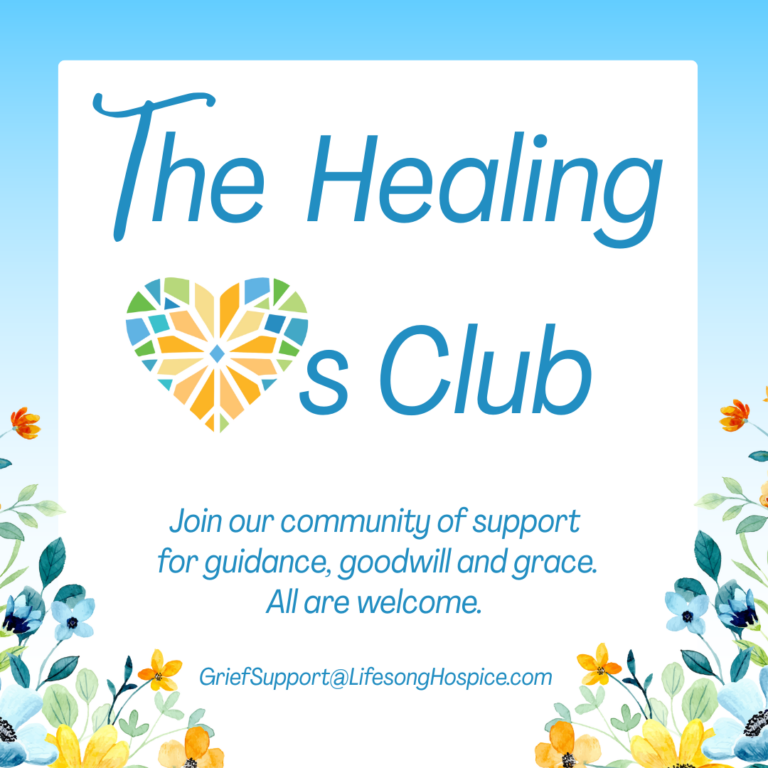
Our Healing Hearts Club brings together survivors who may be experiencing different stages of grief. No matter if it is a recent loss or it is taking months or years to process, there is no “right way” to grieve. However, what is always needed is a safe and supportive space to share experiences and learn from each other.
Explaining Death to Children
Children understand more than we think and often handle death better than some of the adults around them. Death can be explained the same way other important milestones are communicated: in a simple, honest, straightforward and caring way.
- Ask what the child already knows or thinks about death.
- Validate feelings and encourage children to share their thoughts, fears and observations. Explain that feelings of being sad, mad and confused are ok and it is safe to cry and not hide their feelings.
- Explain the circle of life and that all living things will die someday.
- Use examples of what death means (example: Grandma’s heart stopped beating.) and how it is different than being asleep (example: All body parts work when you are sleeping. When a person dies, the body has stopped working.)
- Prepare for what to expect at a funeral or memorial service and the cemetery by discussing what the child will see and hear. Knowing who will be there and what they will be asked to say and do helps take the surprise out of the experience.
Survivors Guide when Death Occurs
Helpful Resources
This web-based tool is designed to keep loved ones connected and keep family and friends informed on the ongoing circumstances. The tools make it possible to coordinate all the offers to help from family and friends in an easy and unobtrusive way. It’s simple to list tasks like meal delivery, household chores or errands. Additionally, contributors can post pictures and share messages about their loved one.
Grief and Loss Blogs/Online Support Groups
Resources for Children and Families
Book Recommendations
Adult Books
- A Child’s View of Grief: A Guide for Parents, Teachers, and Counselors by Alan Wolfelt
- Chicken Soup for the Grieving Soul by Jack Canfield
- Death Without Denial, Grief Without Apology: A Guide for Facing Death and Loss by Barbara K. Roberts
- Don’t Let Death Ruin Your Life: A Practical Guide to Reclaiming Happiness After the Death Of A Loved One by Jill Brooke
- Fatherless Women by Clea Simon
- Helping Adults with Mental Retardation Grieve a Death Loss by Charlene Luchterhand & Nancy Murphy
- How Do We Tell the Children? A Step-by-Step Guide for Helping Children Two to Teen Cope When Someone
Dies by Dan Schaefer and Christine Lyons - Living When a Loved One Has Died by Earl Grollman
- Love Does Not Die – People Do by Donna Jean Robertson
- Men and Grief by Carol Staudacher
- Surviving Holidays, Birthdays, and Anniversaries by Brook Noel
- The Empty Chair by Susan J. Zonnebelt
- The Next Place by Warren Hanson
- This Time of Caregiving James E. Miller
- Tuesdays with Morrie: An Old Man, a Young Man, and Life’s Greatest Lesson by Mitch Albom
- Wednesdays at the Fluff ‘n’ Fold by Elizabeth Calbalka
- When Bad Things Happen to Good People by Ted O’Neal
- When Parents Die: A Guide for Adults by Edward Myers
Children and Teen Books
- Aarvy Aardvark Finds Hope by Donna O’Toole
- Chicken Soup for the Teenage Soul by Jack Canfield
- Coping with the Death of a Brother or Sister by Ruth Ann Ruiz
- Healing After the Suicide of a Loved One by Ann Smolin
- Helping Children Grieve & Grow by Donna O’Toole
- The 10th Good Thing About Barney by Judity Viorst
- The Fall of Freddie the Leaf by Leo Buscaglia
- You Are Not Alone: Teens Talk About Life After the Loss of a Parent by Lynn Hughes